The search for life beyond Earth just got a major boost. NASA’s Perseverance rover has uncovered a rock on Mars containing seven previously unidentified organic molecules—the most diverse collection ever detected on the Red Planet. This isn’t just another data point. It’s a seismic shift in how we view Mars’ potential to have once harbored life.
Organic molecules—carbon-based compounds often associated with life—don’t guarantee biology. But their presence, especially in such chemical diversity, paints a compelling picture of ancient Mars: wetter, richer, and far more chemically active than previously imagined. This discovery redefines the narrative of planetary habitability and sets a new benchmark for Mars science.
A Geological Time Capsule in Jezero Crater
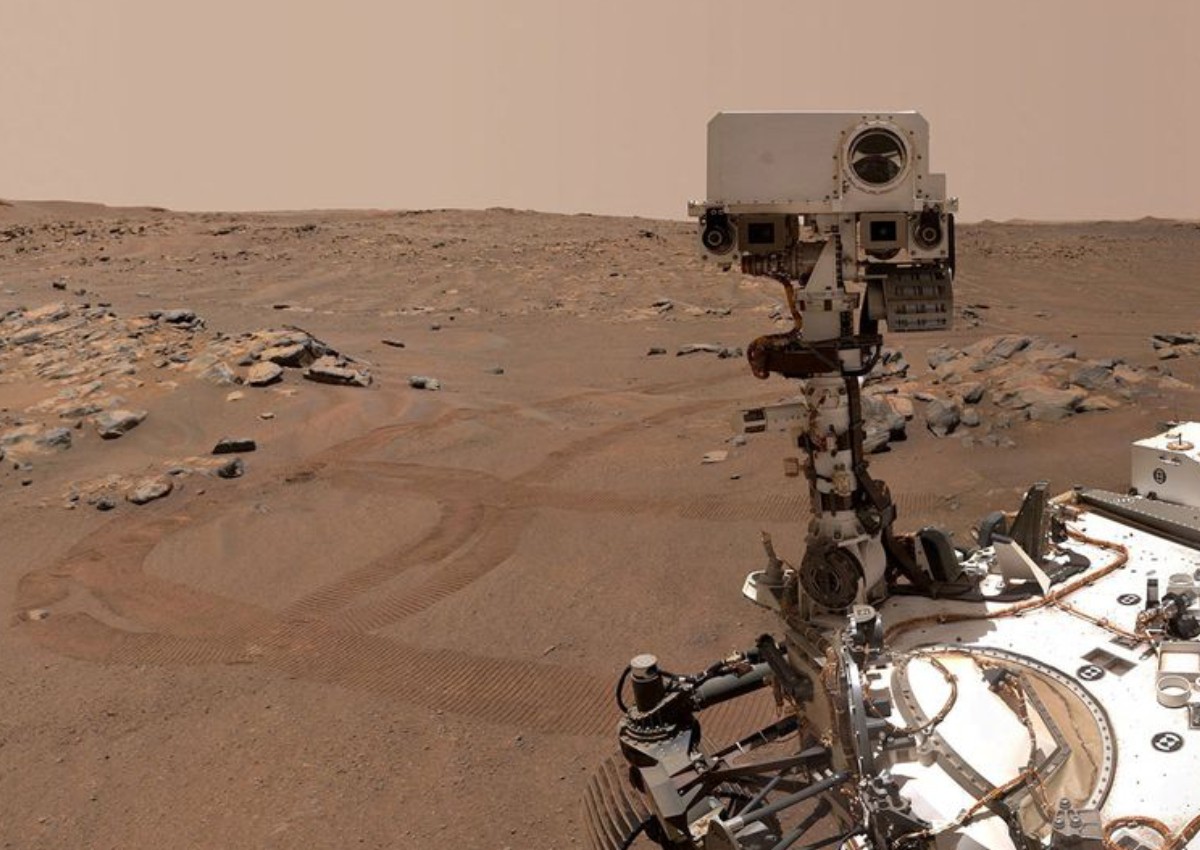
The discovery was made in Jezero Crater, a 28-mile-wide impact basin that once hosted a lake and river delta. Billions of years ago, this region likely had sustained water flow—ideal conditions for preserving organic matter. Perseverance has been methodically sampling rocks here since 2021, targeting those most likely to retain biosignatures.
The specific rock, nicknamed “Wildcat Ridge” by mission scientists, was drilled in mid-2022. Initial analysis via the rover’s on-board instruments—particularly the SHERLOC (Scanning Habitable Environments with Raman & Luminescence for Organics and Chemicals) spectrometer—detected a complex cocktail of carbon-based compounds. After deeper analysis using data beamed back to Earth, researchers isolated seven distinct organic molecules not seen in prior Mars missions.
These include aromatic hydrocarbons, carboxylic acids, and nitrogen-bearing heterocycles—all building blocks associated with biological processes on Earth. While non-biological processes like meteorite impacts or hydrothermal chemistry can produce such molecules, their co-occurrence in a fine-grained sedimentary rock strengthens the case for a once-habitable environment.
“Finding this many diverse organics in a single sample is unprecedented on Mars,” said Dr. Lindsay Hays, deputy program scientist for NASA’s Astrobiology Program. “Even if they’re not proof of life, they’re proof that Mars had the ingredients.”
Why This Discovery Changes the Game
Past Mars missions have detected organic molecules—Curiosity found chlorobenzene and thiophenes in Gale Crater, and traces of methane have fluctuated in the atmosphere. But those findings were either sparse, fragmented, or controversial due to potential contamination.
What sets Wildcat Ridge apart is the diversity and context. The molecules are embedded in sulfate-rich layers, typical of evaporative lake environments. This suggests they were trapped during sedimentation—preserved like fossils in Earth’s ancient shales.
Three factors make this discovery pivotal:
- Chemical Complexity: Seven distinct organics in one sample exceed any prior detection in number and structural variety.
- Geological Context: The rock formed in a habitable setting—calm water, fine sediments, and mineralogical protection.
- Instrument Precision: SHERLOC’s UV Raman spectroscopy offers molecular fingerprinting at a micron scale, reducing ambiguity.

The combination suggests Mars wasn’t just occasionally wet—it hosted persistent, chemically rich environments capable of preserving complex organics over billions of years.
How Perseverance Did It: Science on Wheels
Perseverance isn’t just a rover. It’s a mobile geochemistry lab. The detection relied on a multi-instrument workflow:
- WATSON camera imaged the rock’s texture, confirming it as fine-grained mudstone.
- SuperCam used laser-induced breakdown spectroscopy to assess elemental composition.
- SHERLOC, the star of this discovery, fired a UV laser to excite molecular bonds, measuring the resulting Raman signals to identify organic fingerprints.
SHERLOC’s strength lies in its ability to detect aromatic rings and functional groups—molecular patterns that hint at origin. For example, the presence of benzene derivatives suggests stability under radiation and oxidation, meaning these molecules could have survived long after their formation.
Crucially, these findings were made before the samples are returned to Earth. When the Mars Sample Return (MSR) campaign eventually brings Wildcat Ridge fragments to terrestrial labs, scientists will use tools like high-resolution mass spectrometry and isotopic analysis—capable of distinguishing biological from abiotic origins with far greater confidence.
The Organic Molecules: What They Are and Why They Matter
While NASA hasn’t released full molecular structures, experts have inferred likely candidates based on SHERLOC’s spectral data and analog studies of Martian meteorites.
| Detected Compound Type | Likely Examples | Significance |
|---|---|---|
| Aromatic hydrocarbons | Benzene, toluene | Stable under radiation; common in coal, oil, and living systems |
| Carboxylic acids | Acetic, oxalic acid | Involved in metabolism; form via photochemistry or decay |
| Nitrogen heterocycles | Pyrrole, pyridine | Key in amino acids and nucleotides; rare in abiotic settings |
| Sulfur-containing organics | Thiols, sulfonates | Indicate interaction with sulfate minerals in water |
| Aliphatic chains | Short-chain alkanes | Breakdown products of larger organic matter |
Not all organic molecules are created equal. Some, like methane, can form through serpentinization—a geochemical process in igneous rocks. But the mix found in Wildcat Ridge resembles organic assemblages in Earth’s ancient lakebeds, such as those in Australia’s Pilbara region, where microbial mats left behind complex chemical traces.
This doesn’t mean life existed on Mars. But it means the planet had the chemical ecosystem necessary for life to emerge—assuming it ever did.
Limitations and Caveats: Science Amid the Hype
Media headlines often jump to “signs of life,” but scientists remain cautious. There are critical limitations to current data:
- Ambiguity of Origin: Organics can form through non-biological processes like Fischer-Tropsch synthesis or UV-driven reactions in clays.
- Contamination Risks: While Perseverance is sterile, trace Earth-sourced organics could persist despite cleaning protocols.
- Instrument Constraints: SHERLOC is powerful, but Earth labs can achieve 100x better resolution in molecular identification.
- Spatial Resolution: The laser spot is ~100 microns. It might miss microscopic concentration gradients or layered biosignatures.
Additionally, the sample hasn’t been dated. Without knowing the rock’s exact age, it’s hard to place the organics in Mars’ climatic timeline. Was this during the peak habitable window (~3.8 billion years ago), or a later, less favorable period?
These gaps won’t be closed until the samples return—potentially in the early 2030s. Until then, this is strong circumstantial evidence, not proof.
What’s Next: The Mars Sample Return Campaign
The ultimate test lies ahead. NASA and ESA are jointly developing the Mars Sample Return (MSR) mission, a three-part effort:
- Perseverance continues caching samples in titanium tubes.
- A Sample Retrieval Lander will deploy a fetch rover to collect them.
- A Mars Ascent Vehicle will launch the cache into orbit.
- The Earth Return Orbiter will capture it and deliver it to a secure containment facility.
Wildcat Ridge is a prime candidate for return. Once on Earth, scientists can: - Perform compound-specific isotopic analysis (e.g., carbon-13 ratios, which often differ in biological vs. abiotic systems). - Use electron microscopy to search for microfossils. - Run pyrolysis-GCMS (gas chromatography-mass spectrometry) for definitive molecular ID.
“If these organics show a biological carbon signature, that would be monumental,” said Dr. Amy Williams, a participating scientist on the Perseverance team. “But even if they don’t, they’ll tell us how organic chemistry evolves on a dead planet—and that’s vital for understanding exoplanets.”
Why This Matters Beyond Mars
This discovery reshapes more than Mars science. It impacts how we search for life across the cosmos.
- Exoplanet Research: If Mars—a planet with a thin atmosphere and no magnetic field—preserved complex organics, similar worlds may do the same.
- Origin of Life Theories: Earth’s early organic record is scrambled by plate tectonics. Mars, geologically dormant, may hold clearer clues to prebiotic chemistry.
- Planetary Protection: Future missions will need stricter sterilization if we’re to avoid confounding results with Earth contaminants.
Moreover, the public perception of space exploration shifts. Mars isn’t just a dead, red rock. It’s a world with a chemical history—one that may have flirted with biology.
Closing: A New Chapter in Planetary Science
The discovery of seven new organic molecules in a single Martian rock isn’t a eureka moment. It’s a slow-burning revelation. It tells us that Mars didn’t just have water—it had chemistry. Complex, persistent, and preserved.
For decades, we’ve asked whether Mars could have supported life. Now, we’re asking a more refined question: Did life take hold in environments like Jezero Crater, and can we prove it?
The answer won’t come from one rover or one rock. But Wildcat Ridge is a keystone. It proves Mars can preserve the subtle traces we’re looking for. The rest is a matter of time, return, and relentless scientific rigor.
If you’re following space science, track the Mars Sample Return program. That’s where the next breakthrough will happen—not in headlines, but in a lab, under a microscope, where science speaks in isotopes and molecular weights.
Frequently Asked Questions
What does finding organic molecules on Mars mean? It means Mars once had the chemical building blocks necessary for life, though it doesn’t confirm life existed.
Does this prove life on Mars? No. Organic molecules can form without biology. Their origin—biological or not—requires further analysis on Earth.
How did Perseverance detect these molecules? Using the SHERLOC instrument, which uses UV lasers to identify molecular structures based on light scattering.
Why is Jezero Crater important? It was a lake and river delta billions of years ago, making it ideal for preserving organic matter in sediment.
Will we get these samples on Earth? Yes, through the Mars Sample Return mission, expected to deliver samples in the early 2030s.
Could these molecules be contamination from Earth? NASA enforces strict sterilization, but trace contamination is a concern. Earth-based analysis will help rule it out.
What’s next for Perseverance? The rover continues sampling in Jezero Crater, building a diverse cache for future return to Earth.
FAQ
What should you look for in NASA Rover Finds Rock with 7 New Organic Molecules on Mars? Focus on relevance, practical value, and how well the solution matches real user intent.
Is NASA Rover Finds Rock with 7 New Organic Molecules on Mars suitable for beginners? That depends on the workflow, but a clear step-by-step approach usually makes it easier to start.
How do you compare options around NASA Rover Finds Rock with 7 New Organic Molecules on Mars? Compare features, trust signals, limitations, pricing, and ease of implementation.
What mistakes should you avoid? Avoid generic choices, weak validation, and decisions based only on marketing claims.
What is the next best step? Shortlist the most relevant options, validate them quickly, and refine from real-world results.