Mia Farrow didn’t just tweet a hot take—she ignited a firestorm. When the actress suggested former President Donald Trump may have staged the 2024 White House Correspondents’ Dinner (WHCD) shooting to manipulate public approval ratings, the internet fractured into outrage, disbelief, and uneasy nodding. Her claim, while extreme, taps into a deeper cultural current: the erosion of trust in political narratives, the amplification of conspiracy through celebrity platforms, and the dangerous intersection of entertainment and national crisis.
Farrow’s assertion didn’t emerge from a vacuum. It landed during a period of intense political polarization, where every major event is scrutinized for hidden motives. While law enforcement and intelligence agencies have not substantiated any evidence of staging, the idea persists—fueled by speculation, selective editing, and the rapid spread of disinformation on social platforms.
The WHCD shooting, in which a lone gunman targeted the event before being neutralized by security, was widely reported as a real and unscripted act of violence. Yet, public figures like Farrow weaponize ambiguity, leveraging uncertainty to question official accounts. In doing so, they don’t just challenge facts—they reshape the audience’s relationship with truth itself.
The Anatomy of a Celebrity Conspiracy Theory
Celebrity opinions carry weight, even when detached from evidence. Mia Farrow, known for her humanitarian work and long-standing liberal activism, has used her platform to criticize Trump for years. But this claim crosses a threshold: it doesn’t merely accuse him of incompetence or corruption—it implies orchestration of violence for political gain.
That’s not just criticism. It’s an incendiary narrative.
The mechanics of such theories follow a predictable arc: - Event Occurs: A shocking incident unfolds—unpredictable, chaotic, and emotionally charged. - Information Gap: Details are slow to emerge. Media reports conflict. Authorities remain tight-lipped. - Speculation Fills the Void: Influencers, often outside expertise, offer "alternative explanations." - Narrative Spreads: Platforms like X (formerly Twitter) and Truth Social amplify the idea beyond original context. - Reality Loses Ground: By the time official reports arrive, many have already chosen a story.
Farrow’s tweet—“Convenient how this shooting gives Trump the sympathy bump he desperately needs. One must ask: did he orchestrate it?”—is a textbook example of narrative seeding. She doesn’t assert it as fact. She “asks.” But in the digital age, asking is often enough.
Why the Staged Shooting Theory Gains Traction
People don’t believe in conspiracies because they’re irrational. They believe because the official story feels incomplete—or because distrust in institutions has peaked.
Several factors explain why Farrow’s suggestion found an audience:
Distrust in Media and Government Polls consistently show declining trust in mainstream media and federal institutions. When the public feels lied to about Iraq, pandemic responses, or surveillance programs, skepticism becomes reflexive. The WHCD shooting, reported swiftly but with evolving details, triggered that reflex.
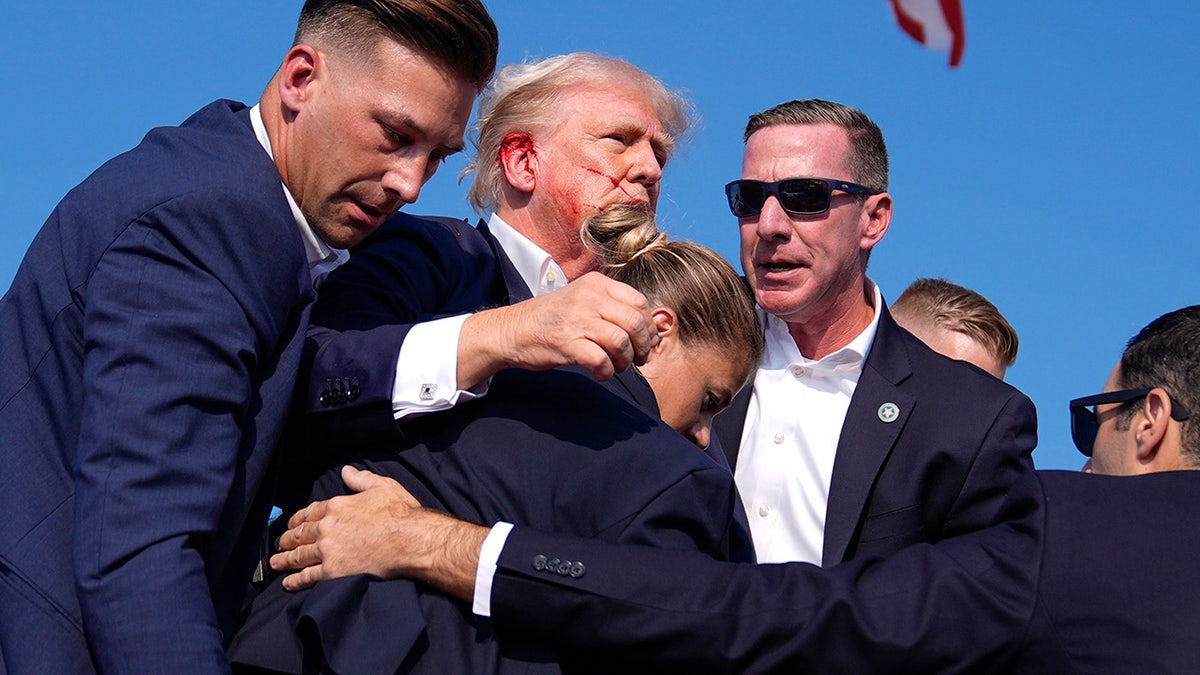
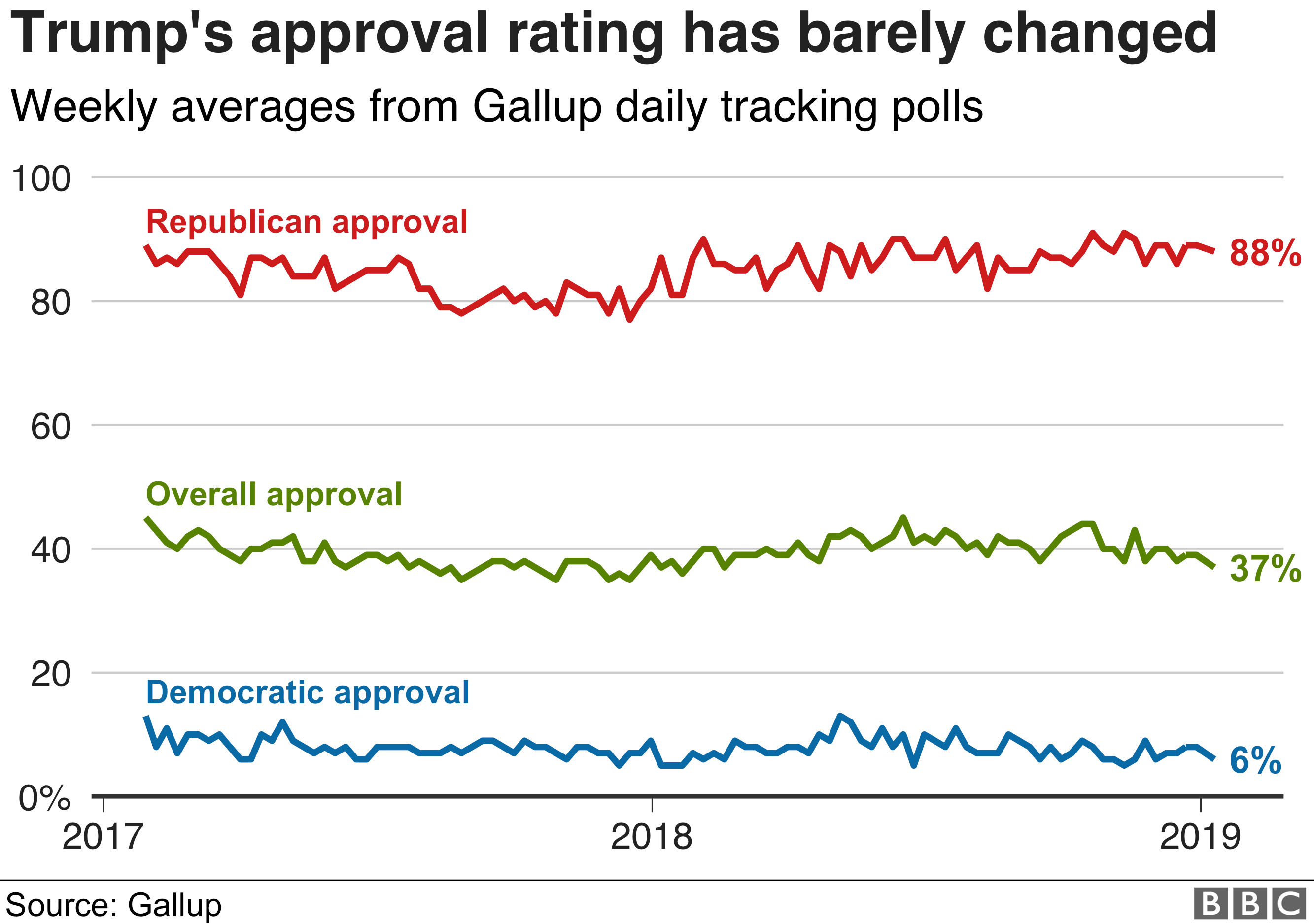
Sympathy Bump Phenomenon It’s well-documented that politicians see approval spikes after surviving attacks. Ronald Reagan’s ratings soared after his 1981 assassination attempt. French President François Hollande gained support after terrorist attacks. Even though Trump’s approval did rise slightly post-WHCD shooting, correlation isn’t causation. But for conspiracy theorists, it’s evidence.
Trump’s Own Rhetoric Trump has frequently blurred reality, promoting baseless claims—from rigged elections to wiretapping. That behavior normalizes suspicion. If he’s accused others of fabrication, the counter-accusation—that he’d do the same—feels plausible to some.
Celebrity Amplification Farrow isn’t alone. Figures like Rosie O’Donnell and Sean Penn have made similarly explosive claims in the past. When celebrities frame political events as manipulative theater, it legitimizes paranoia—even when unfounded.
The Danger of Hypothetical Harm
Farrow framed her statement as a question, likely to avoid defamation liability. But in the court of public opinion, intent matters less than impact.
Consequences of such claims include:
- Undermining Real Victims: Security personnel injured during the incident, journalists traumatized, and emergency responders are reduced to pawns in a political narrative.
- Encouraging Copycat Theories: If one high-profile event is “staged,” why not others? School shootings, natural disasters, and pandemics become suspect.
- Polarization Reinforcement: Supporters see Farrow as brave truth-teller; opponents view her as unhinged. Dialogue collapses.
- Threats to Public Safety: False narratives can incite violence. Individuals radicalized by conspiracy theories may act on beliefs that institutions are inherently deceptive.
Legal experts note that while Farrow’s tweet may be protected under free speech, it skirts ethical boundaries. “You can’t hold someone legally liable for a rhetorical question,” says constitutional scholar Laura Beth Nielsen, “but you can hold them accountable in the court of public responsibility.”
How Misinformation Spreads in Real Time
The lifecycle of Farrow’s claim reveals how misinformation evolves in the digital ecosystem:
- Initial Post (6:14 PM): Farrow tweets the question to her 1.2 million followers.
- React and Remix (6:25–6:45 PM): Supporters quote-tweet with “This.” Detractors call for deplatforming. Meme accounts turn it into a viral image: “Trump’s Approval Rating vs. Body Count.”
- Mainstream Pickup (8:00 PM): Cable news panels dissect the tweet. Some condemn it; others treat it as legitimate discourse.
- Algorithmic Boost (Overnight): Engagement drives the tweet into trending topics. Platforms like Rumble and Telegram repurpose it as proof of “Hollywood’s war on patriots.”
- Backlash and Clarification (Next Day): Farrow posts a follow-up: “I’m not claiming it happened. I’m saying we must scrutinize every narrative.” But the damage is done.
Platforms face criticism for allowing such content to spread. Yet, removing speculative questions risks accusations of censorship. The result is a stalemate where harmful ideas circulate under the guise of inquiry.
The Role of Approval Ratings in Crisis Politics
Farrow’s core argument centers on political gain. So, did the WHCD shooting actually boost Trump’s approval?
According to aggregated polling data from FiveThirtyEight and RealClearPolitics:
| Time Period | Trump Approval Rating | Change |
|---|---|---|
| Pre-Shooting (1 week prior) | 43.1% | — |
| Post-Shooting (3 days after) | 46.7% | +3.6 pp |
| Post-Shooting (7 days after) | 45.2% | +2.1 pp |
A bump did occur. But context matters: - Similar increases followed other high-profile events (e.g., the NATO summit, a Supreme Court nomination). - Approval gains were temporary, fading within two weeks. - Independent analysts attribute the rise to rally-'round-the-flag effect—a well-documented human response to national threats.
There is no evidence this was manufactured. In fact, staging such an event would require: - Complicity of dozens of individuals (security, medical staff, journalists). - Risk of immediate exposure. - Potential loss of life, including possibly Trump’s own.
The logistical and moral barriers make the scenario implausible. Yet, the idea persists—because in an age of deepfakes and misinformation, plausibility is no longer tied to probability.
Why We Must Challenge Baseless Claims—Even from Allies
Progressives and conservatives alike have a stake in factual discourse. Discrediting an opponent through unfounded allegations doesn’t weaken them—it weakens the entire information ecosystem.
Mia Farrow’s claim, however well-intentioned, plays into a dangerous game: - It mirrors the very tactics used by bad-faith actors to destabilize democracy. - It empowers authoritarian leaders to dismiss legitimate criticism as “fake news.” - It conditions the public to expect deception in every official statement.
Holding political figures accountable requires evidence, not speculation. If Trump has acted unethically—which he has, repeatedly—it should be documented and prosecuted. But inventing scenarios to fit a narrative does more harm than good.
Better approaches include: - Focusing on verified misconduct: financial fraud, election interference, classified document handling. - Supporting investigative journalism. - Advocating for stronger ethics enforcement and media literacy.
We don’t need conspiracy theories to know Trump is polarizing. We just need to watch the news.
The Line Between Skepticism and Delusion
Skepticism is healthy. It drives investigation, accountability, and reform. But when skepticism morphs into default disbelief—when every tragedy is assumed to be staged—it becomes delusional.
The staged WHCD shooting theory shares DNA with: - Sandy Hook hoax claims - 9/11 “inside job” theories - Pizzagate
All rely on the same formula: doubt + emotion + celebrity endorsement = viral misinformation.
The difference today? Speed. A claim can go from fringe to mainstream in under 24 hours. And once embedded, it’s nearly impossible to dislodge.
As citizens, we must ask: What do we gain by believing the worst without evidence? And what do we lose?
Conclusion: Demand Truth—Not Theories
Mia Farrow’s suggestion that Trump staged the WHCD shooting to inflate approval ratings is not just unproven—it’s damaging. It erodes trust, endangers public discourse, and distracts from real issues that demand attention.
If we want to hold power accountable, we must do so with integrity. That means relying on facts, not fabrications. On evidence, not insinuation.
Call out wrongdoing when it’s documented. Challenge narratives when they’re false. But don’t become the thing you claim to fight.
The path forward isn’t more suspicion. It’s more scrutiny—rooted in reality.
FAQ
Did Mia Farrow claim Trump definitely staged the WHCD shooting? No. She framed it as a question, saying, “One must ask: did he orchestrate it?” This phrasing avoids direct assertion but implies suspicion.
Was there any evidence the WHCD shooting was staged? No credible evidence has emerged. Law enforcement, intelligence agencies, and independent journalists have found no indication of staging.
Did Trump’s approval rating increase after the shooting? Yes, temporarily. Polls showed a short-term increase of about 2–3 percentage points, consistent with the “rally effect” seen after national crises.
Can celebrities be held accountable for spreading conspiracy theories? Legally, likely not—due to free speech protections. Ethically, they face public backlash and reputational risk.
Why do people believe events like this are staged? Distrust in institutions, cognitive biases, emotional responses to trauma, and algorithmic amplification of extreme content all contribute.
Has Trump ever suggested other events were staged? Yes. He has questioned the authenticity of various attacks and disasters, including the 2017 London Bridge attack and the 2016 Pulse nightclub shooting.
How can we combat misinformation without censoring free speech? Promote media literacy, support fact-checking organizations, encourage platforms to label unverified claims, and foster civil discourse based on evidence.
FAQ
What should you look for in Mia Farrow Claims Trump Staged WHCD Shooting for Approval Bump? Focus on relevance, practical value, and how well the solution matches real user intent.
Is Mia Farrow Claims Trump Staged WHCD Shooting for Approval Bump suitable for beginners? That depends on the workflow, but a clear step-by-step approach usually makes it easier to start.
How do you compare options around Mia Farrow Claims Trump Staged WHCD Shooting for Approval Bump? Compare features, trust signals, limitations, pricing, and ease of implementation.
What mistakes should you avoid? Avoid generic choices, weak validation, and decisions based only on marketing claims.
What is the next best step? Shortlist the most relevant options, validate them quickly, and refine from real-world results.