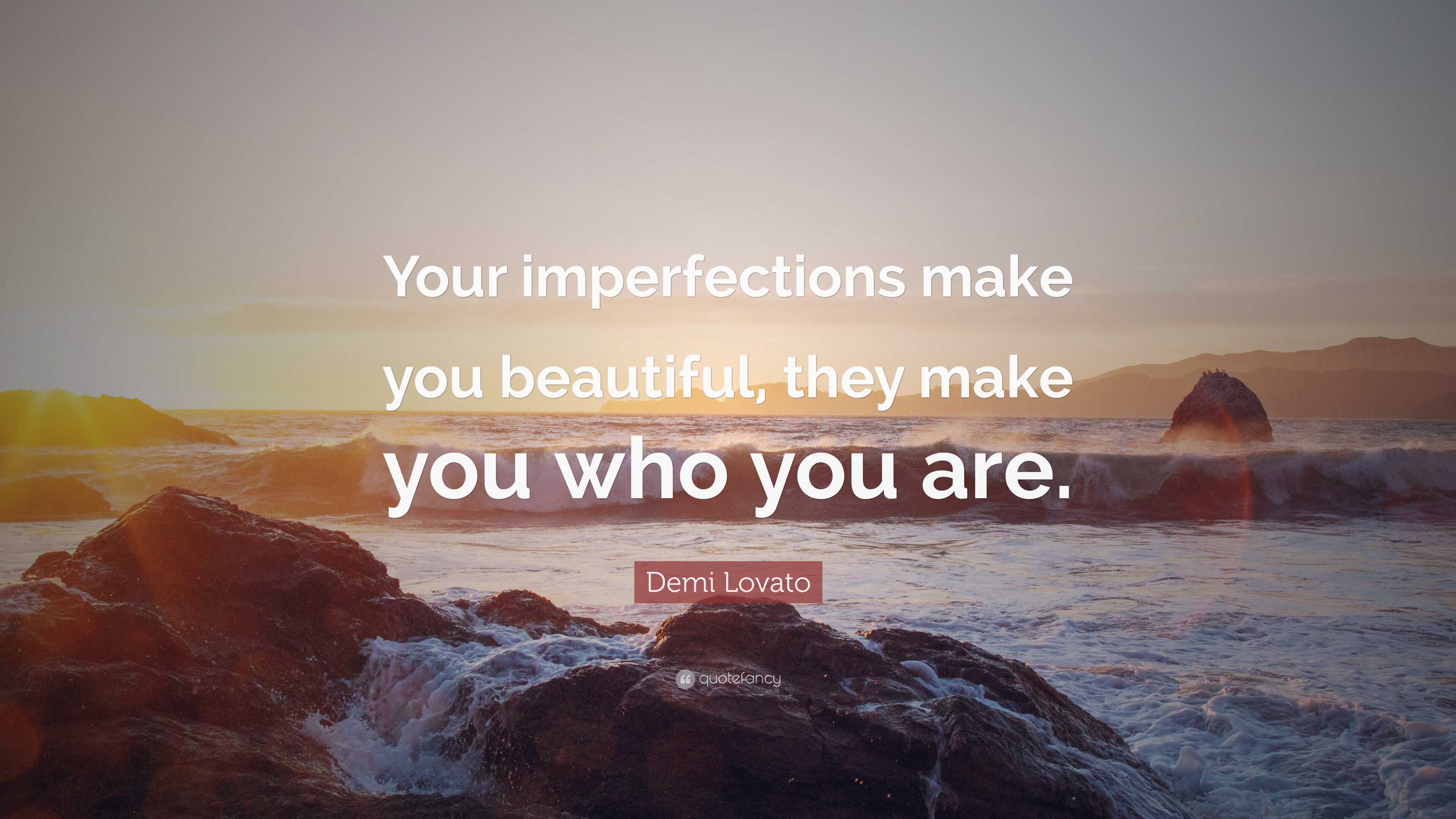
We scroll past curated images, polished reels, and highlight reels that scream perfection—yet inside, many of us feel fractured, insecure, not enough. That dissonance is real. And that’s exactly why a simple quote from Demi Lovato cuts through the noise: “Your imperfections make you beautiful. They make you who you are. So just be yourself, love yourself for who you are.”
This isn’t just feel-good fluff. It’s a radical act of defiance against internalized shame, societal pressure, and the exhausting pursuit of flawlessness. In a world obsessed with filters and facades, Lovato’s message lands like a mirror held up to the soul—challenging us not to fix ourselves, but to finally see ourselves.
And more than that, it’s a roadmap. Behind the quote lies a lifetime of struggle, survival, and self-reclamation. This is the kind of wisdom earned in therapy rooms, rehab centers, and onstage under blinding lights. Let’s unpack it—not as fans, but as humans searching for truth.
The Weight of “Be Yourself” in a World That Rewards Conformity
On the surface, “just be yourself” sounds easy. But dig deeper, and you hit resistance: - The job interview where you downplay your quirks to seem “professional.” - The social media post you delete because it “feels too raw.” - The relationship where you hide your trauma history, fearing judgment.
Demi Lovato didn’t arrive at this quote through theory. They arrived through years of public breakdowns, addiction battles, and mental health advocacy. Their 2018 overdose wasn’t a scandal—it was a crisis point in a life lived under relentless scrutiny. Yet from that darkness emerged a louder, clearer voice: Stop pretending. Start healing.
When they say “be yourself,” they don’t mean perform authenticity. They mean tolerate your real self—the anxious thoughts, the scars, the moments you don’t have it together. That’s where beauty lives.
Why Imperfection Is Not a Flaw—It’s a Signature
Modern psychology backs this. Brené Brown’s research on vulnerability shows that people who feel worthy of love don’t hide their struggles—they integrate them. They don’t see imperfection as failure. They see it as evidence of being human.
Take a musician with a slightly off-pitch note in a live performance. A perfectionist hears disaster. An artist grounded in authenticity hears emotion—a crack in the voice that reveals truth.
Lovato’s music reflects this. Listen to “Skyscraper,” written during treatment for an eating disorder. The vocal cracks aren’t polished out. They’re left in—because they carry the weight of survival. That song isn’t beautiful despite the imperfection. It’s beautiful because of it.
Practical takeaway: Next time you catch yourself editing your story—softening your pain, exaggerating your wins—pause. Ask: Am I hiding to fit in, or am I sharing to connect? The latter builds deeper relationships, real influence, and lasting self-worth.
The Hidden Struggle Behind the Quote
Lovato didn’t write this quote in a moment of peace. They’ve spoken openly about bipolar disorder, addiction, and body image battles. Their journey includes relapses, hospitalizations, and public criticism. In 2021, they came out as non-binary, later clarifying they use both she/they pronouns—a fluid identity that itself defies neat categorization.
That complexity is the point.
Society wants clean narratives: struggle → recovery → triumph. But real healing is nonlinear. You can advocate for mental health and still have bad days. You can sing “Sorry Not Sorry” and still apologize too much in real life.
The quote “love yourself for who you are” isn’t a destination. It’s a daily practice. It means: - Forgive yourself when you slip up. - Honor your boundaries, even if others call you “too much.” - Stop waiting to “fix” yourself before you start living.
Demi’s power lies in showing up as is—voice shaky, truth unfiltered.
Happiness Isn’t the Absence of Pain—It’s the Presence of Meaning
One of the most damaging myths? That happiness means constant joy. Lovato’s life dismantles that. Their music catalog swings from empowerment anthems to haunting ballads of despair. That range isn’t a flaw—it’s a testament to emotional honesty.
True happiness, research suggests, isn’t about feeling good all the time. It’s about meaning. Viktor Frankl, Holocaust survivor and psychiatrist, found that people who survived extreme suffering often had a “why” to live for—even when the “how” was unbearable.
Lovato’s “why” seems clear: to help others feel less alone.
In interviews, they’ve said things like: > “If my story can save one person, then every painful moment was worth it.”
That’s not performative altruism. It’s the core of post-traumatic growth—the idea that we can emerge from struggle not just healed, but transformed.
Real-world example: A college student recovering from an eating disorder starts a blog. She shares her relapses, her shame, her therapy notes. She doesn’t have it all figured out. But her honesty draws hundreds of messages: “I thought I was the only one.” That connection? That’s meaning. That’s happiness redefined.
Success Redefined: From Charts to Courage
Demi Lovato has #1 albums, Grammy nominations, and millions of followers. But if you ask what defines their success now, it’s not the accolades. It’s the ability to show up as their full self.
In a 2022 interview, they said: > “I used to think success was fame. Now I know it’s peace. It’s waking up and not hating who I see in the mirror.”
That shift mirrors a broader cultural awakening. More people are questioning traditional metrics of success: - Is a high-paying job worth burnout? - Is social media clout worth emotional depletion? - Can you be successful if you’re not “fixed”?
Lovato’s answer: Yes—if success includes self-acceptance.
Consider this contrast:
| Traditional Success | Authentic Success |
|---|---|
| External validation | Internal peace |
| Image control | Emotional honesty |
| Constant achievement | Sustainable growth |
| Hiding struggle | Sharing lessons |
Which version feels more attainable? More fulfilling?
Human Nature: We’re Wired to Hide—But Also to Heal
Let’s be honest: wanting to hide our flaws isn’t vanity. It’s survival. For centuries, belonging meant conformity. Straying from the norm risked exile. Our brains are still wired to fear rejection.
But here’s the counter-wire: we’re also built for connection. And real connection requires vulnerability.
When Lovato shares their journey with addiction, they’re not just “being brave.” They’re activating a deep human reflex: mirroring. Someone sees their truth, and thinks, Maybe I’m not broken. Maybe I’m normal.
That’s why this quote spreads as a “quote of the day.” It’s not just inspiring—it’s liberating. It gives permission.
Common mistake: Waiting until you’re “better” to speak up. But your current struggle is your superpower. The person hiding in shame today could be the voice that saves someone tomorrow.
How to Live
This Quote—Not Just Share It
Knowing the quote is easy. Living it? That’s the work.
Here’s how to apply it meaningfully:
- Replace self-criticism with curiosity.
- Instead of “I’m such a mess,” try “What’s really going on here?” Example: You cancel plans last minute. Instead of shame, ask: Was I overwhelmed? Needing rest? Protecting my energy? That’s self-knowledge—not failure.
- Share one true thing daily.
- Text a friend: “I’m not okay today.” Post a story about therapy wins. Small acts of honesty build courage.
- Audit your influences.
- Unfollow accounts that make you feel “less than.” Follow voices like Lovato’s—ones that normalize struggle.
- Let your work show cracks.
- A writer leaves a sentence slightly awkward because it feels real. A speaker shares a moment they cried during a presentation. That’s not unprofessional—it’s human.
- Measure progress by self-compassion, not perfection.
- Did you speak kindly to yourself after a mistake? That’s growth. Celebrate it.
Final Thought: Your Story Is Your Strength
Demi Lovato didn’t become iconic because they’re flawless. They became iconic because they’re real. Their music, activism, and voice resonate because they carry the weight of lived experience.
So the next time you read “your imperfections make you beautiful,” don’t just nod and scroll. Believe it. Because the part of you that feels broken? That’s the part that can heal others. The flaw you hide? That’s your fingerprint. The struggle you survive? That’s your legacy.
Be yourself. Not the polished version. The real one. Then watch how the world leans in.
FAQ What is Demi Lovato’s most famous quote about self-love? “Your imperfections make you beautiful. They make you who you are. So just be yourself, love yourself for who you are.”
How has Demi Lovato’s mental health journey influenced their message? Their public battles with addiction, eating disorders, and bipolar disorder ground their advocacy in real experience, making their calls for self-acceptance deeply authentic.
Does Demi Lovato still identify as non-binary? They came out as non-binary in 2021 and use both she and they pronouns, reflecting a fluid gender identity they continue to embrace.
Why is this quote so popular as a ‘quote of the day’? It combines emotional truth, simplicity, and empowerment—ideal for daily inspiration on social media and wellness platforms.
Can embracing imperfection improve mental health? Yes. Research shows self-acceptance reduces anxiety and depression, increases resilience, and fosters deeper relationships.
How can I practice self-love like Demi Lovato preaches? Start small: speak kindly to yourself, share your truth with trusted people, and stop waiting to be “fixed” before you start living.
Is the quote attributed to a specific song or interview? While consistent with their public messaging, this version appears most often in interviews, social media posts, and fan-shared content rather than a single official source.
FAQ
What should you look for in Demi Lovato's Quote of the Day: Embrace Imperfection, Find Strength? Focus on relevance, practical value, and how well the solution matches real user intent.
Is Demi Lovato's Quote of the Day: Embrace Imperfection, Find Strength suitable for beginners? That depends on the workflow, but a clear step-by-step approach usually makes it easier to start.
How do you compare options around Demi Lovato's Quote of the Day: Embrace Imperfection, Find Strength? Compare features, trust signals, limitations, pricing, and ease of implementation.
What mistakes should you avoid? Avoid generic choices, weak validation, and decisions based only on marketing claims.
What is the next best step? Shortlist the most relevant options, validate them quickly, and refine from real-world results.