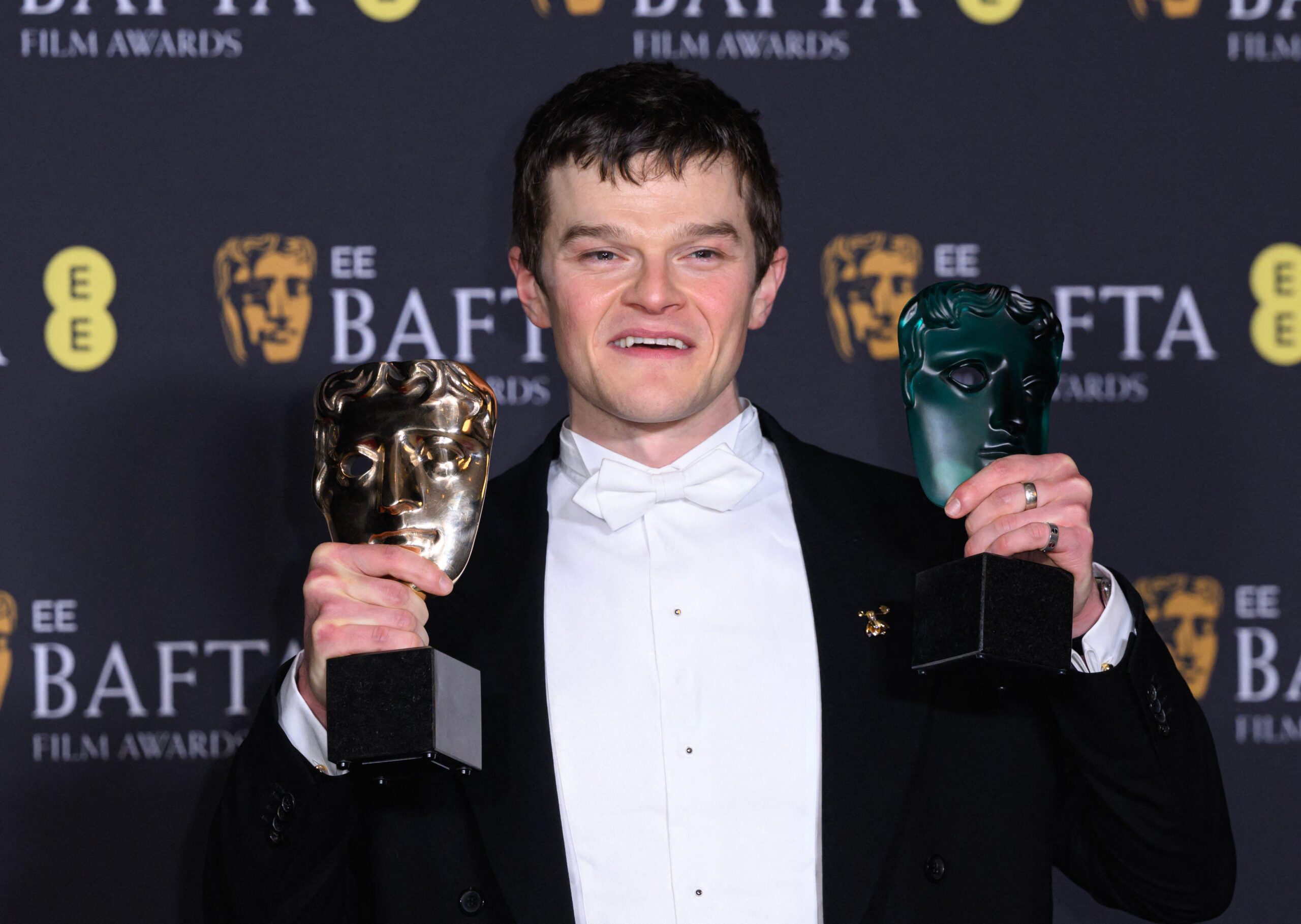
The 2026 BAFTA Craft Awards didn’t just celebrate technical mastery—they confirmed a cultural shift in British television. At the heart of the evening was Adolescence, the Netflix drama that has become a benchmark for emotionally raw storytelling and visual innovation. Scooping two major gongs, the series extended its winning streak, proving consistency isn’t luck—it’s craftsmanship.
Meanwhile, Celebrity Traitors, the high-stakes reality format that revitalized prime-time entertainment, earned its place in the spotlight with a tightly deserved award for sound design. While not a drama heavyweight, its win underscores how craft excellence transcends genre. Together, these victories paint a picture of British television at its most diverse and technically accomplished.
This isn’t just about trophies. It’s about the quiet artisans behind the screen—the editors shaping tension, the cinematographers building mood, the sound teams grounding fiction in reality.
Let’s break down what these wins mean, who made them possible, and why they signal a turning point in how prestige television is defined.
Adolescence: Why the Craft Community Embraced the Series
From its opening scene—a single unbroken take tracking a 16-year-old through a chaotic school hallway—Adolescence announced itself as more than a teen drama. It was a technical masterclass.
Its BAFTA Craft Awards wins—one for Editing: Fiction, the other for Original Music Score—weren’t surprises. They were inevitabilities.
The Editor’s Invisible Hand
Lead editor Lila Chen received the Editing award for her work on the season finale, “Fracture.” The episode hinges on a 22-minute sequence intercutting a police interrogation with flashbacks that refract memories through emotional distortion.
What made it award-winning?
- Pacing as psychology: The cuts don’t follow chronology—they mirror dissociation. Flashbacks blur at the edges, audio desyncs, and jump cuts mimic panic.
- No reliance on exposition: Entire character arcs unfold in reaction shots layered across timelines.
- Collaboration with sound: Chen worked closely with the sound team to create “audio bleed,” where dialogue from one timeline faintly overlaps another, enhancing disorientation.
A common mistake in multi-timeline editing is over-signaling—using title cards, filters, or dramatic music cues. Adolescence avoids this. Its power lies in ambiguity. The viewer must feel before they understand.
The Score That Breathes
With Trauma
Composer Eamon Doyle, a relative unknown before Adolescence, won for Original Music Score with a soundtrack that does more than accompany—it interacts.
The score’s signature technique? Heartbeat harmonics.
Doyle recorded actors’ heartbeats during emotionally intense scenes, then tuned piano and string sections to those frequencies. The result: a subliminal resonance between character and music. When a character panics, the music doesn’t react—it anticipates.
In Episode 6, “Stillness,” the protagonist suffers a dissociative episode. The soundtrack drops to near silence, but a low cello hum—tuned to her resting heart rate—persists. It’s not dramatic. It’s diagnostic.
Critics have called it “the most physiologically attuned score in television history.” BAFTA’s recognition confirms that innovation in music isn’t just about melody—it’s about integration.
Celebrity Traitors: The Unlikely Craft Darling
While Adolescence dominated headlines, Celebrity Traitors quietly won the Sound: Factual category—an unusual honor for a reality show.
But this wasn’t just about clean audio or crisp dialogue. The judges cited the show’s “immersive psychological soundscape,” a deliberate strategy to amplify tension without manipulation.
How Sound Built Suspicion
The production team deployed a technique known as directional unease:
- Microphones were hidden in key locations (e.g., the castle’s dungeon room, the traitor’s meeting table) to capture ambient creaks, whispers, and breath.
- These sounds were subtly enhanced in post-production—amplifying inhalations before lies, layering distant footsteps during confrontations.
- No music was used during interrogation segments. Instead, the team relied on audio isolation, dropping all but one voice to create claustrophobia.
This approach flips the script on reality TV. Most shows use music to telegraph drama (“ominous synth swell = someone’s lying!”). Celebrity Traitors trusts silence—and the human ear’s instinct to detect deception in breath patterns and hesitation.
One judge noted: “It’s the first time I’ve felt genuinely suspicious of someone because of how they cleared their throat.”
That’s craft.
Behind the BAFTA Craft Awards: What These Wins Reveal
The BAFTA Craft Awards differ from the main BAFTAs—they honor the how, not the who.
Winners are typically cinematographers, costume designers, VFX artists, editors, and sound engineers. The public rarely knows their names. But their work defines a show’s texture.
This year’s choices signal three evolving priorities in British television:
- Emotional authenticity over spectacle
- Adolescence won for subtle, internalized techniques—not flashy visuals. The trend is clear: audiences respond to craft that serves psychology.
- Genre fluidity is no longer a barrier
- A reality show beating documentaries and dramas in a technical category? That’s new. It means execution now trumps format prejudice.
- Collaboration is king
- Both winning teams emphasized cross-disciplinary work. The Adolescence edit succeeded because of sound; Celebrity Traitors’ sound succeeded because of camera placement.
These aren’t isolated wins. They reflect a broader shift toward integrated craftsmanship, where departments don’t hand off work—they build it together.
The Ripple Effect: What These Wins Mean for Future Productions
Awards don’t just celebrate—they influence.

For emerging creators: - Editing is storytelling, not cutting. The Adolescence win validates experimental pacing. Expect more shows to abandon rigid three-act structures. - Music as character, not backdrop. Doyle’s approach will inspire composers to think biologically, not just melodically. - Reality TV is a sandbox for innovation. Celebrity Traitors proves that even “light” formats can push technical boundaries.
For production teams: - Invest in pre-post collaboration. The best work happens when editors, sound designers, and composers are involved in pre-production. - Test emotional impact via physiological response. Some studios are now using biometric feedback (heart rate, skin conductance) during screenings to gauge scene effectiveness—a technique Adolescence used in secret.
A Cautionary Note Not all craft innovation lands. Some shows have mimicked Adolescence’s editing style but failed because they copied the form without the intent.
Example: A recent BBC drama used jump cuts and audio bleed in a trauma scene—but without the character groundwork, it felt gimmicky.
Lesson: Technique must serve story. Otherwise, it’s just noise.
Why Adolescence Isn’t Just a Hit—It’s a Blueprint
Adolescence began as a modest Netflix commission: a six-part series about a teen accused of a school shooting. On paper, it sounded exploitative.
But the execution—spearheaded by showrunner Nina Patel—was the opposite. It avoided courtroom theatrics, media sensationalism, and moral grandstanding. Instead, it focused on micro-behaviors: the way a mother folds laundry when anxious, how a teacher avoids eye contact after a lie.
Its BAFTA wins reward that restraint.
The series now joins a rare pantheon—The Crown, Top Boy, Line of Duty—as a show that doesn’t just win awards, but redefines production standards.
Streaming platforms are already greenlighting “Adolescence-style” dramas—quiet, character-driven, technically ambitious. But replicating its success requires more than budget. It demands patience, trust in the audience, and a willingness to let craft lead.
The Bottom Line: Craft Is No Longer Behind the Curtain
The 2026 BAFTA Craft Awards made one thing clear: the artisans are the auteurs now.
Whether it’s a Netflix drama dissecting trauma or a reality show weaponizing silence, the most impactful television today is built on invisible labor.
Adolescence didn’t win because it was important. It won because its editors, composers, and sound designers treated every frame and frequency as part of a cohesive emotional language.
And Celebrity Traitors? It proved that even in entertainment designed for mass appeal, craft can elevate the trivial into the tense.
For creators, the message is straightforward: - Stop chasing awards. - Start obsessing over integration. - Let technique serve truth.
The trophies will follow.
Frequently Asked Questions
Did Adolescence win any other awards besides editing and music? No—those were its only nominations at the Craft Awards. However, it’s expected to be a major contender at the main BAFTA Television Awards in April.
How does a reality show win a sound award over documentaries? By demonstrating innovative use of audio to shape viewer psychology. The judges emphasized originality and impact over genre prestige.
Who composed the Adolescence score? Eamon Doyle, an Irish composer known previously for indie film work. This is his first major award.
Was the editing win controversial? Not widely. Industry insiders had flagged Lila Chen’s work months in advance. Some critics argue the show overuses disorienting cuts, but the consensus supports the win.
What makes the BAFTA Craft Awards different from the main BAFTAs? The Craft Awards focus exclusively on technical and behind-the-scenes roles—editing, sound, costume, VFX—rather than acting or best series.
Will there be a second season of Adolescence? Netflix has not officially confirmed, but Patel has said the story was designed as a limited series. A spin-off centered on the legal system is in early development.
How can indie creators apply Adolescence’s techniques on low budgets? Focus on audio-detail and performance-driven editing. You don’t need expensive effects—just precision in timing and sound layering.
FAQ
What should you look for in BAFTA Craft Awards: Adolescence Shines with Dual Wins? Focus on relevance, practical value, and how well the solution matches real user intent.
Is BAFTA Craft Awards: Adolescence Shines with Dual Wins suitable for beginners? That depends on the workflow, but a clear step-by-step approach usually makes it easier to start.
How do you compare options around BAFTA Craft Awards: Adolescence Shines with Dual Wins? Compare features, trust signals, limitations, pricing, and ease of implementation.
What mistakes should you avoid? Avoid generic choices, weak validation, and decisions based only on marketing claims.
What is the next best step? Shortlist the most relevant options, validate them quickly, and refine from real-world results.